The Flooring Detail That Matters More Than Any Exercise Choice for a Quiet Workout
Quick Answer: A thick, dense exercise mat placed directly on the floor absorbs far more impact noise than exercise choice alone can control, because impact sound travels through the floor structure itself — even genuinely low-impact movements can transmit noticeable noise downstairs without adequate flooring underneath.
Swapping burpees for a quieter alternative only solves part of the noise problem if the surface transmitting that noise hasn’t changed at all.
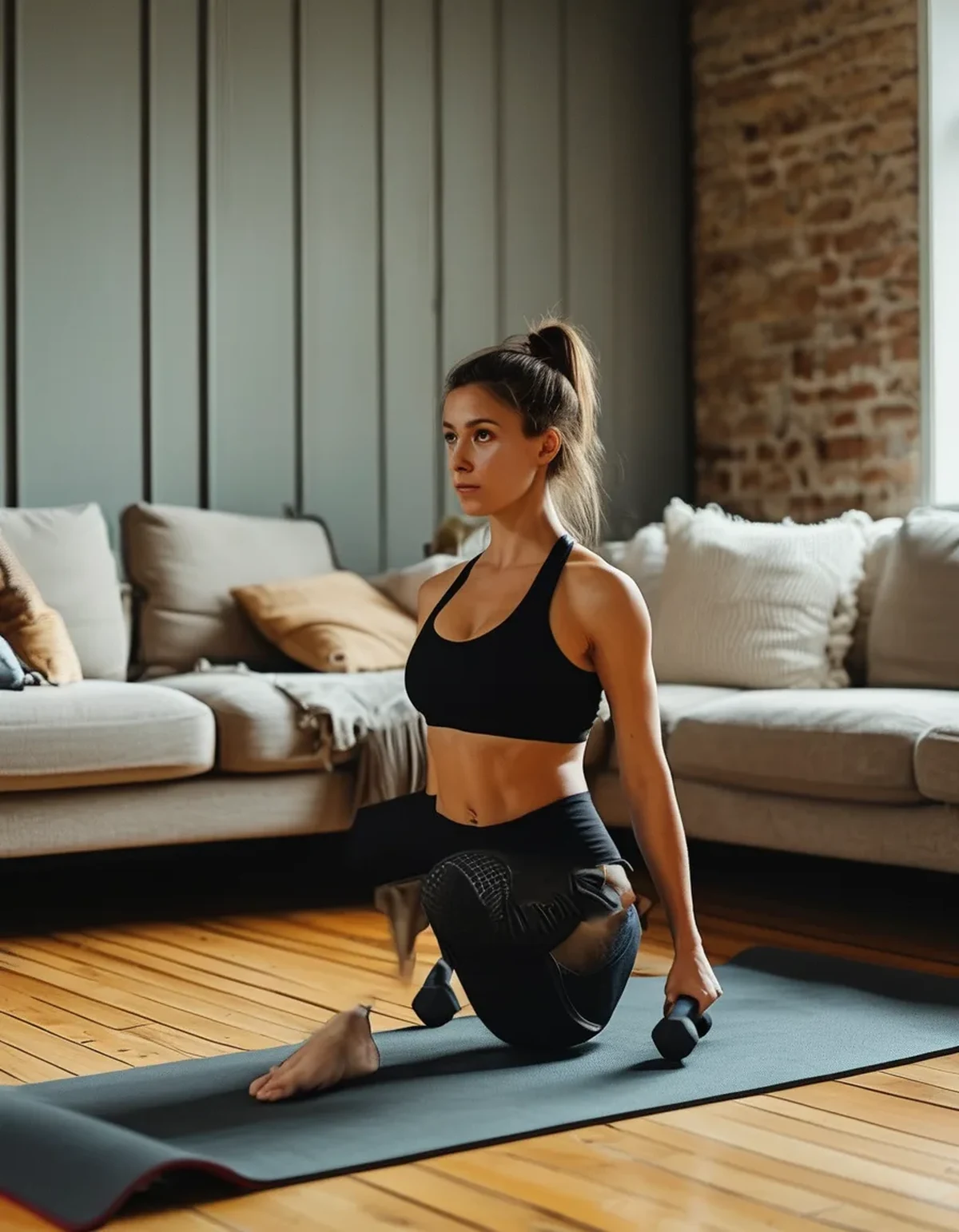
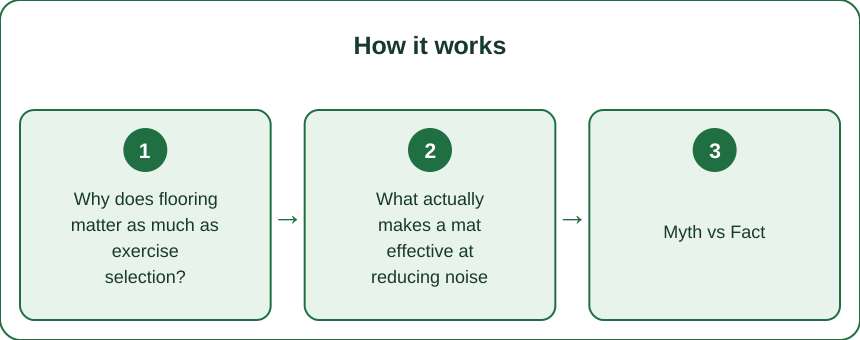
Why does flooring matter as much as exercise selection?
Impact noise doesn’t just come from how hard a foot lands — it comes from how efficiently that impact energy transfers into the building’s structure, and a thin mat or bare floor transfers that energy far more efficiently than a thick, dense one.
This is why even someone doing careful, low-impact movement can still generate noticeable noise downstairs if they’re working out directly on a thin yoga mat over a hard floor — the exercise choice was right, but the surface undid a lot of that effort.
What actually makes a mat effective at reducing noise transfer, specifically?
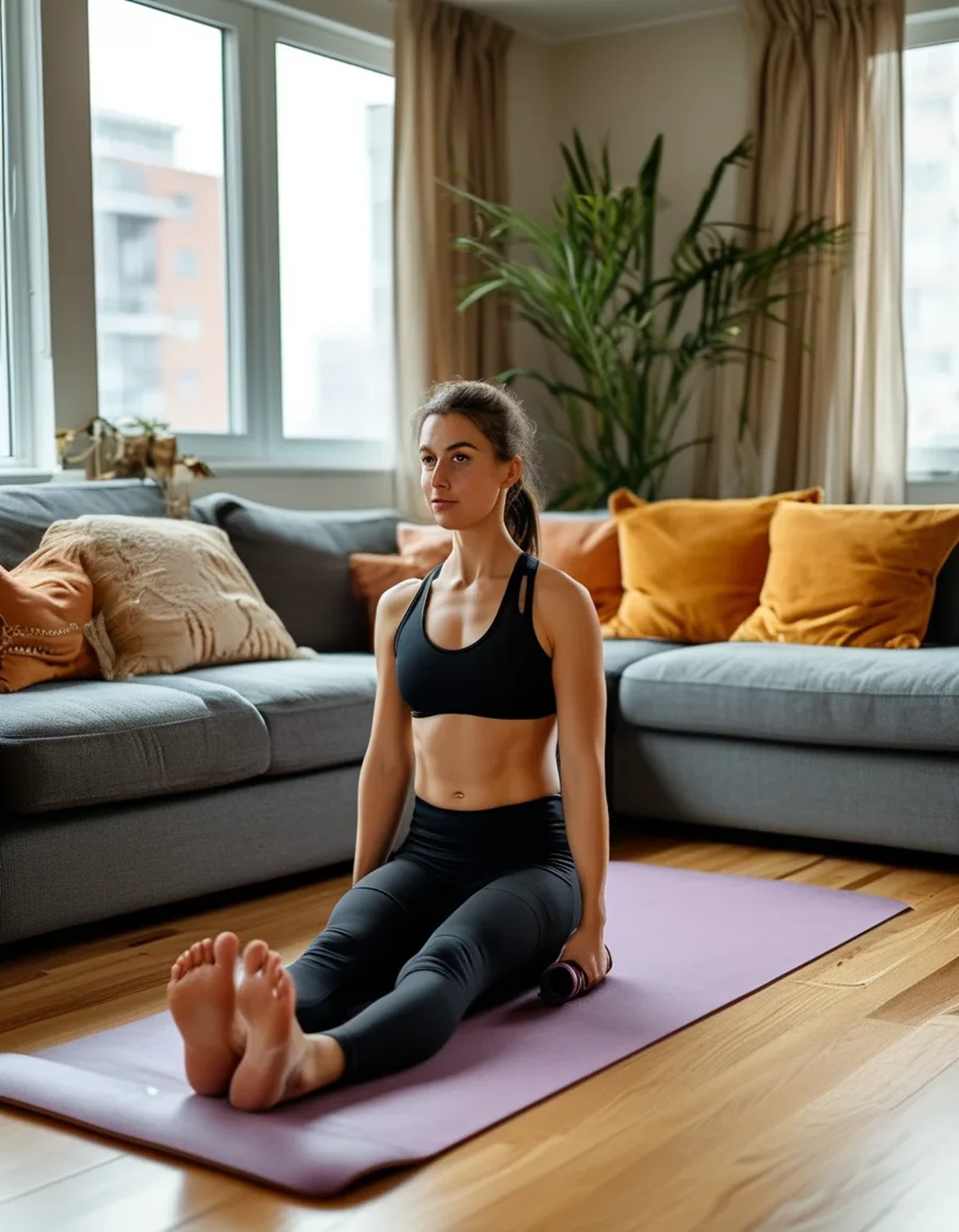
Thickness and density both matter: a mat needs to be thick enough to create physical distance from the hard floor and dense enough to absorb impact energy rather than simply compressing and transmitting it through.
Stacking two mats, or using a dedicated thick foam exercise mat rather than a thin yoga mat, meaningfully improves noise absorption for anyone doing jumping or higher-impact movement in a shared-wall space.
Myth vs Fact: Quiet Workout Flooring
Myth: any yoga mat provides meaningful noise reduction. Fact: standard thin yoga mats are designed for grip and joint comfort, not impact absorption, and provide only minor noise reduction compared to a genuinely thick foam mat.
Myth: carpet alone is enough to prevent noise complaints. Fact: carpet helps somewhat but doesn’t fully solve impact noise on its own — pairing carpet with a thick mat gives meaningfully better results than either alone.
Does this mean exercise choice doesn’t matter at all?
No — exercise choice still matters, especially for genuinely high-impact movements like jump squats or plyometric work, where even excellent flooring may not fully eliminate noise.
The most reliable combination is choosing quieter exercise variations where possible and adding proper flooring on top of that choice, rather than treating either one as a complete solution by itself.
How do you know if your current setup is actually working?
Asking a neighbor directly, if that relationship allows it, is the most reliable feedback — self-assessment from inside the apartment is notoriously unreliable since impact noise often sounds much louder one floor down than it does at the source.
Timing a session to avoid clearly quiet hours (very early morning or late night) adds another layer of consideration on top of flooring choices, since even well-absorbed noise is more noticeable during hours when background sound is otherwise minimal.
What’s a reasonable budget setup for someone starting from nothing?
A single thick foam exercise mat, roughly an inch or more in thickness, covers most apartment noise concerns for moderate workout intensity without requiring a large investment.
For consistently high-impact training, a dedicated rubber gym flooring tile setup provides a noticeably bigger noise reduction, though it’s a bigger investment better suited to someone training that way regularly rather than occasionally.
FAQ: Quiet Workout Flooring Questions, Answered
Does mat placement matter, or just the mat itself?
Placement matters somewhat — positioning a workout area away from shared walls when possible reduces noise transfer independent of the mat itself.
Are rubber gym tiles worth it for someone in a small apartment?
For frequent higher-impact training, yes; for occasional light workouts, a good foam mat is usually sufficient without the extra cost and setup.
Can furniture placement below help reduce perceived noise for a downstairs neighbor?
That’s outside what an upstairs resident can control directly, but choosing off-peak hours and investing in good flooring are the practical levers available from the upstairs side.
TL;DR:
- Flooring affects noise transfer as much as, or more than, exercise selection alone
- Thin yoga mats provide minimal impact absorption compared to thick foam mats
- Combining quieter exercise choices with proper flooring gives the best results
- Checking in with a neighbor is more reliable feedback than guessing from inside
- A single thick mat is a reasonable starting point before investing in gym tiles
The quietest exercise in the world still needs the right surface underneath it to actually stay quiet.
Keep Reading
This article is for general informational and styling purposes only. Fit, sizing, and product availability may vary.