Why Working Out Silently Feels Mentally Harder Than an Identical Loud Workout
The exact same workout, same reps, same weight, same intervals, can feel noticeably harder mentally when done in near silence for an apartment, and that’s not just perception, there’s a real psychological mechanism behind it.

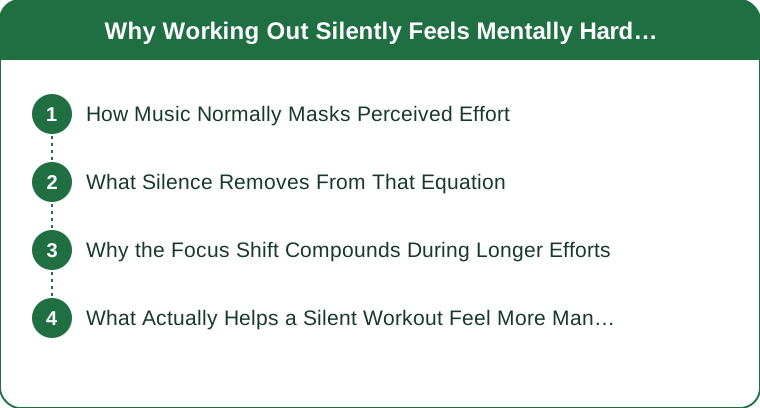
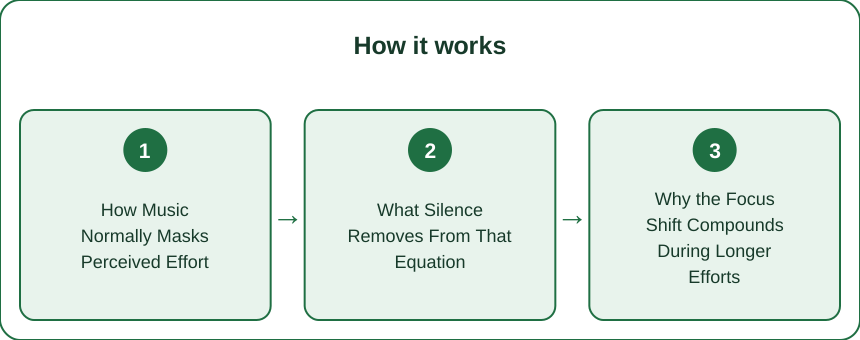
How Music Normally Masks Perceived Effort
The usual role of music: upbeat music acting as an external distraction that measurably lowers perceived exertion during exercise, a well-documented effect where the same physical workload feels easier with the right music than without it.
What Silence Removes From That Equation
The direct consequence: a quiet workout removing that distraction effect entirely, leaving attention with nowhere to go except directly onto the physical sensation of effort, which is why the identical workout can feel notably harder without it.

Why the Focus Shift Compounds During Longer Efforts
The compounding factor: sustained silent effort, particularly during longer intervals or higher-rep sets, giving the mind more uninterrupted time to fixate on discomfort specifically, an effect that tends to grow rather than fade as a set goes on.
What Actually Helps a Silent Workout Feel More Manageable
The practical adjustment: counting reps or breath cycles out loud internally, or using a rhythm-based mental cue instead of music, providing enough of a distraction substitute to close some of the gap silence creates, and the frame (a silent workout feels harder because it removes music’s distraction effect, not because the exertion itself changed — deliberately substituting a rhythm or counting cue closes part of that gap.)
The exact same workout, same reps, same weight, same intervals, can feel noticeably harder mentally when done in near silence for an apartment, and that’s not just perception, since upbeat music normally acts as an external distraction that measurably lowers perceived exertion during exercise, a well-documented effect where identical physical workload feels easier with the right music than without it. A quiet workout removes that distraction entirely, leaving attention with nowhere to go except directly onto the physical sensation of effort, and sustained silent effort, particularly during longer intervals or higher-rep sets, gives the mind more uninterrupted time to fixate on that discomfort, an effect that tends to grow rather than fade as a set goes on. Counting reps or breath cycles out loud internally, or using a rhythm-based mental cue instead of music, provides enough of a distraction substitute to close some of that gap, which is a more useful fix than simply pushing through the extra mental difficulty.
Keep Reading
This article is for general informational and styling purposes only. Fit, sizing, and product availability may vary.