The Complete Quiet Apartment Strength Program Your Downstairs Neighbors Won't Notice
Quick Answer: A quiet-apartment strength program replaces every impact and equipment-drop movement with tempo-based, floor-contact-controlled versions — think slow squats instead of jump squats, and controlled dumbbell lowers instead of drops — while still hitting every major muscle group across a full week.
Most apartment workout advice just tells you to skip jumping jacks. A real program needs to replace the entire training stimulus, not just remove the loud parts.
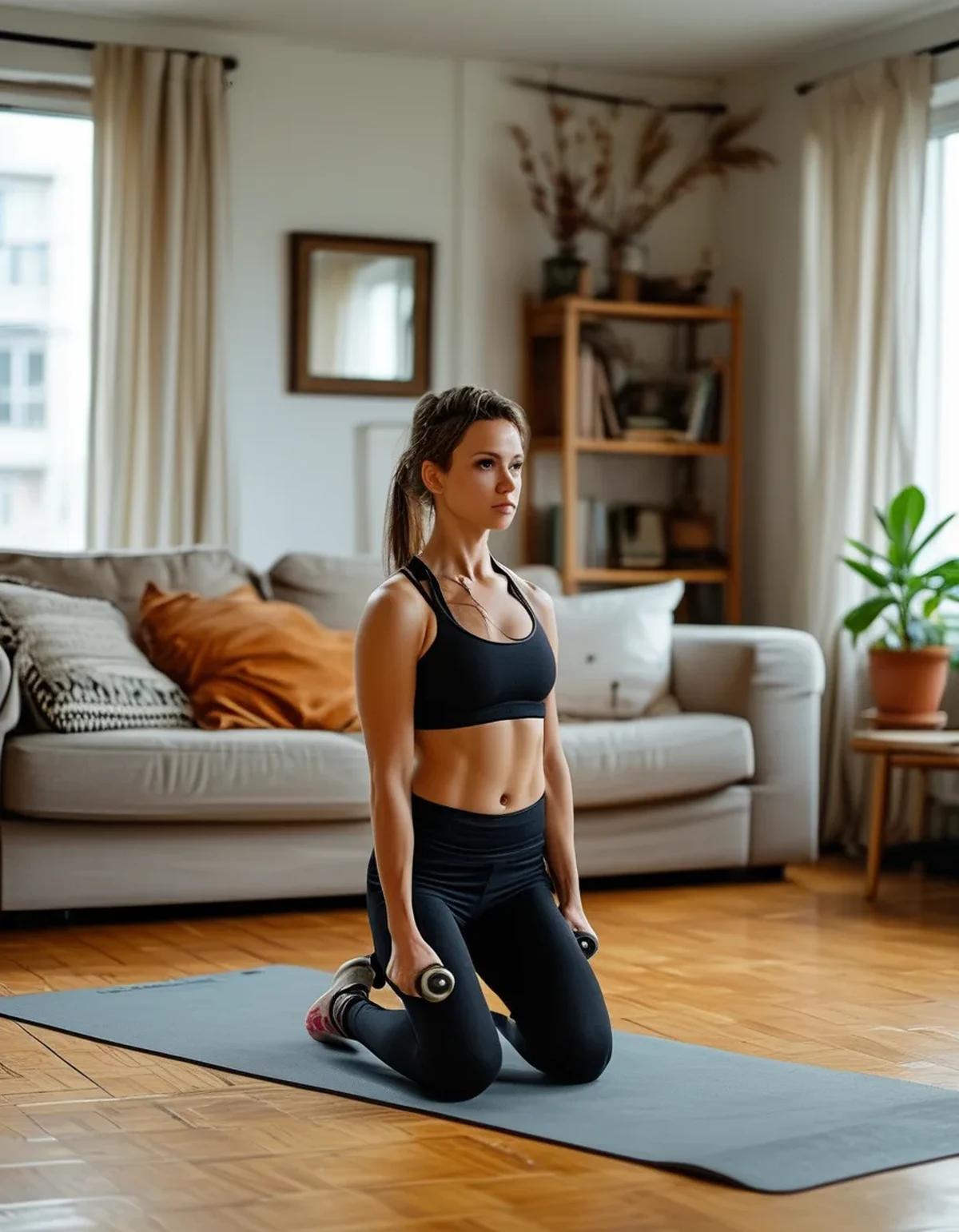
What actually makes a home workout loud, beyond the obvious jumping?
The two biggest noise sources are impact forces transmitted through the floor (landing from a jump, dropping a weight) and repeated footfalls at speed (running in place, fast footwork drills). Equipment noise — a dumbbell clanking, a mat sliding — is usually a smaller but still noticeable contributor, especially in the evening when ambient noise elsewhere in the building drops.
How do you build a lower-body day with zero impact?
Replace jump squats with tempo squats (3 seconds down, 1 second pause, 2 seconds up), replace box jumps with slow step-ups, and replace running-based cardio with slow-motion mountain climbers or wall sits held for time. A full lower-body session: 4 sets of tempo squats, 3 sets of Bulgarian split squats per leg, 3 sets of glute bridges, and a 3-round wall sit finisher — all silent, all genuinely challenging.
How do you build an upper-body day using controlled tempo instead of momentum?
Slow push-ups (4-second lowering phase), controlled dumbbell rows, and isometric holds replace anything involving a dropped weight or a fast, momentum-driven rep. A full upper-body session: 4 sets of tempo push-ups, 3 sets of single-arm rows (set the dumbbell down slowly, never drop it), 3 sets of overhead presses, and a plank-to-downward-dog flow for the core and shoulders.
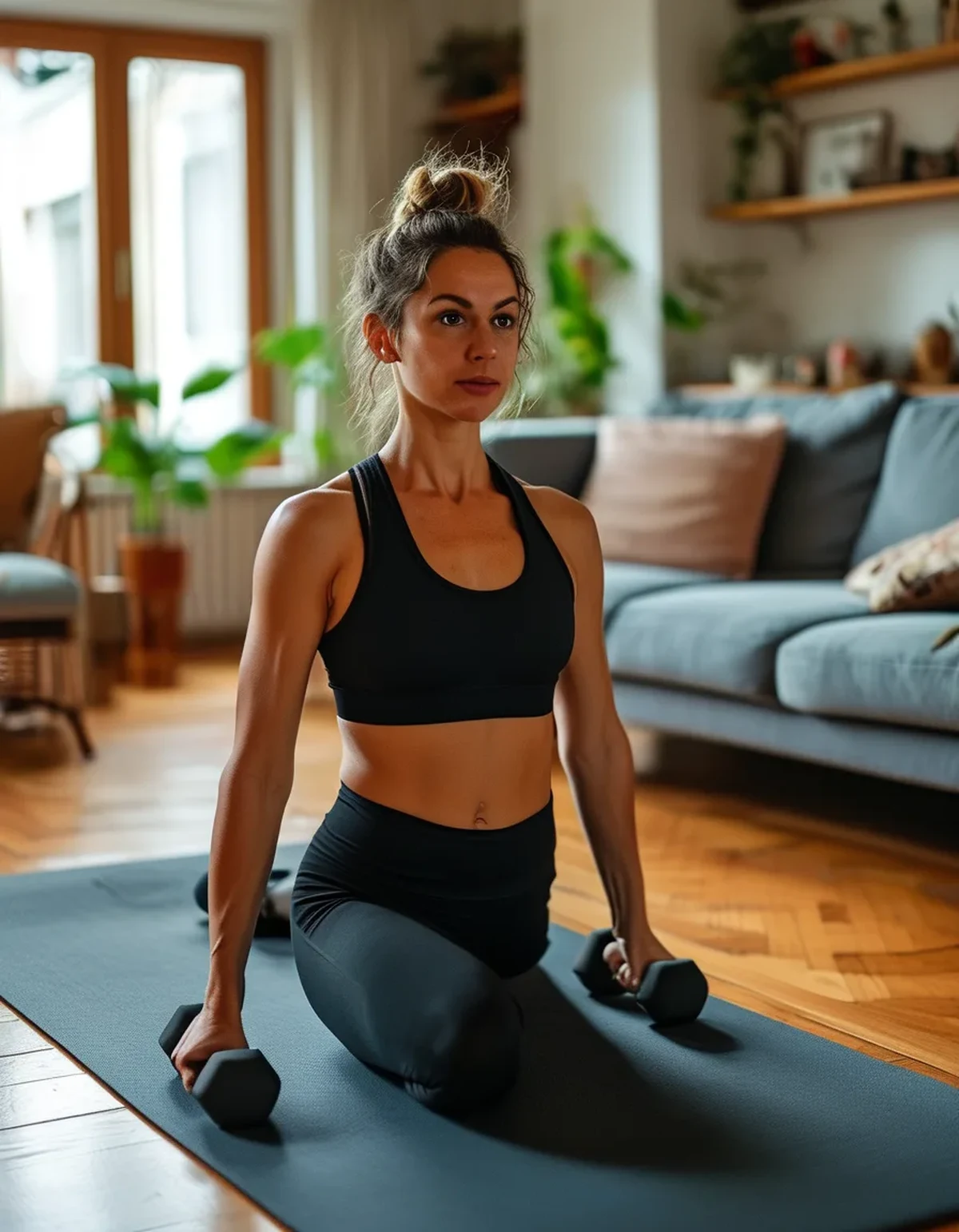
How do you structure a full week without repeating the same silent patterns every day?
A workable split is lower body Monday and Thursday, upper body Tuesday and Friday, and a full-body tempo circuit Wednesday, leaving weekends free or for a slow-flow mobility session. Because tempo work is more fatiguing per rep than fast, momentum-based training, fewer total reps at a slower speed still delivers a comparable strength stimulus, so the program doesn’t feel diluted just because it’s quiet.
What role does flooring actually play, separate from your exercise choices?
A thick interlocking foam mat under your main training area absorbs a meaningful amount of the vibration that would otherwise transfer through the floor to the unit below, even for controlled movements. This matters most for anything involving a dumbbell touching the ground — the mat is doing real work here, not just providing comfort.
Myth vs Fact: Quiet Apartment Training
Myth: You can’t build real strength without some impact-based exercise. Fact: Tempo-based resistance training builds comparable strength without any impact, just through time-under-tension instead of speed.
Myth: Quiet workouts are automatically easier workouts. Fact: Slow, controlled reps are frequently more fatiguing than fast ones at the same load, because muscles stay under tension longer.
Myth: You need a full home gym to train quietly. Fact: A mat, one or two dumbbells, and tempo control cover a genuinely complete program.
FAQ: Quiet Apartment Strength Questions, Answered
Can I still do cardio quietly, or is strength the only option?
Low-impact cardio like slow-motion shadowboxing, step-touches, or a resistance band circuit can raise your heart rate meaningfully without any floor impact.
How do I know if my tempo reps are actually hard enough?
If the last 2-3 reps of a set genuinely challenge your form, the tempo is doing its job — count time under tension rather than rep speed as your effort gauge.
Will my neighbors notice anything at all with this approach?
Some very light vibration from footwork is normal in most buildings, but the impact-based noise that generates complaints is essentially eliminated with tempo substitutions and a proper mat.
TL;DR:
- Replace every impact movement with a tempo-controlled version — slow squats, controlled push-ups, held isometrics
- A full week can hit lower body, upper body, and full-body work without a single loud rep
- Tempo training is often more fatiguing than fast reps at the same load, not an easier substitute
- A thick mat under your main training spot absorbs the vibration that controlled movements still create
This program isn’t a scaled-down version of a real workout — it’s a full program that happens to be silent, and most people find the slower tempo makes them work harder, not less.
Keep Reading
This article is for general informational and styling purposes only. Fit, sizing, and product availability may vary.