Which Quiet Home Cardio Equipment Is Actually Quiet — and Which Just Claims to Be
Quick Answer: Equipment makes two kinds of noise: airborne sound, which you hear in the room, and structure-borne vibration, which travels through the floor into other units — and the second one is what neighbors complain about. Quiet claims and decibel specs describe the first kind almost exclusively. By transmission, magnetic bikes and rowers are genuinely apartment-safe, ellipticals and steppers are conditional, and anything with footstrike — walking pads at jogging speeds, and jump rope — sends rhythm through the building no matter how quiet it sounds where you stand.
Match the machine to the noise type, add a real damping stack, and the downstairs neighbor never learns your training schedule.

Why do neighbors hear a machine that sounds quiet to you?
Because you are listening to the air, and they are listening to the building.
Airborne noise — motor hum, fan whir, belt whoosh — spreads through the room, loses energy at every wall, and mostly stays with you. It is what your ears judge, and what the marketing measures.
Structure-borne noise is different physics: an impact or oscillation presses directly into the floor, and the building’s joists and concrete carry it like a soundboard. Low-frequency thumps travel absurdly well through structure, lose little energy on the way, and re-radiate out of the neighbor’s ceiling as a thud they feel as much as hear. This is why your downstairs neighbor can identify your footstrike cadence but not your podcast.
The cruel part: the two noise types barely correlate. A cheap fan bike is loud in your room and nearly invisible downstairs; a whisper-marketed walking pad at 5 mph is silent to your ears while broadcasting a metronomic pulse two floors down. Judging your neighbor impact by what you hear is measuring the wrong channel.
Rhythm makes it worse. Human hearing forgives random noise and locks onto periodic signals — a steady 160-steps-per-minute pulse is more annoying at low volume than irregular noise at higher volume. Cardio is rhythmic by nature, which is exactly why it generates a disproportionate share of building complaints. The whole game of apartment cardio is therefore one sentence: minimize what enters the floor, because you cannot argue with what the structure does afterward.
How does the equipment actually rank?
By what touches the floor and how, not by decibels.
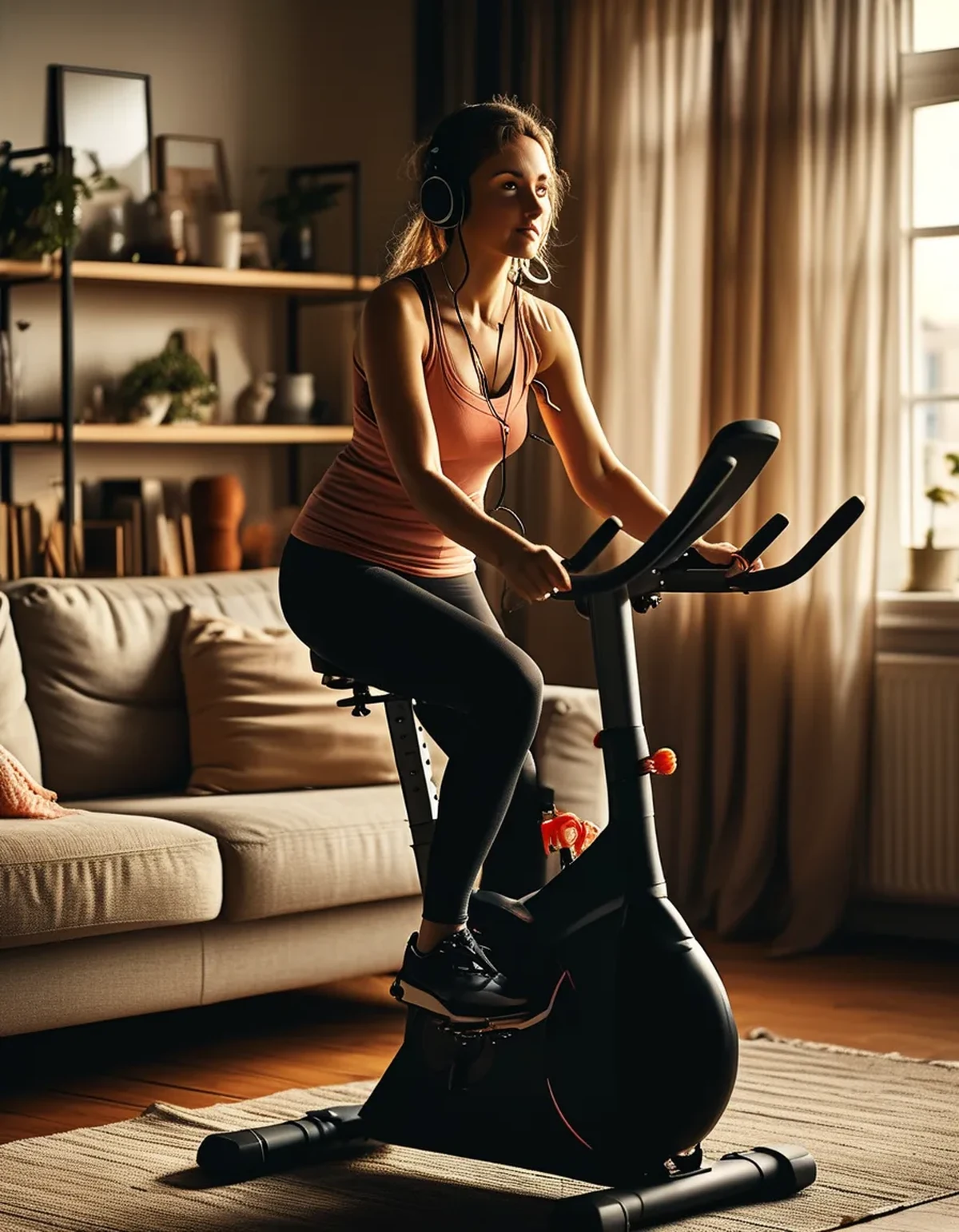
Magnetic exercise bikes — the apartment champion. Your feet never leave the pedals, so there is no impact at all; the load is smooth circular pressure. Magnetic resistance is near-silent airborne too. A bike on a rubber mat is as close to undetectable as home cardio gets. Air-resistance fan bikes are the same downstairs but loud in your own room.
Magnetic rowers — nearly as good, with one asterisk. The stroke is smooth and impact-free; the asterisk is the catch — letting the handle jerk or the seat slam at the stroke ends sends pulses into the rail and floor. Technique is the silencer. Water and air rowers add whoosh for you, not thump for them.
Ellipticals — good, conditionally. No footstrike, but the long pedal arcs rock the frame; a light or wobbly unit taps its feet against the floor in rhythm. Heavy flywheel, level feet, and a dense mat make them fine; flimsy ones fail the test.
Steppers and stair mimics — conditional. Smooth hydraulic motion is fine; the failure mode is bottoming out the pedals with a clack per step, plus squeaks as they age.
Walking pads — honest at walking speeds only. At 2.5 to 3.5 mph a soft-stepping walker transmits modest pulses a good mat can handle. At jogging speeds, physics wins: running doubles your effective footstrike force, and no consumer pad absorbs that.
Jump rope and plyometrics — not apartment equipment. Every landing is a mallet strike on the soundboard. Ground floor or garage only, whatever the mat ads say.
5 Quiet-Equipment Claims to Ignore
Whisper-quiet motor. The motor was never the problem — motors make airborne noise, neighbors receive structure-borne. A silent motor under a pounding footstrike is a silent getaway car at a loud robbery.
Rated 45 decibels. Measured empty, at one meter, in a lab — no user aboard, no load, and says nothing about vibration into the floor, which decibel meters in the room barely register anyway. It is an answer to a question nobody downstairs asked.
Apartment-friendly treadmill. At walking speeds, defensible. The photo of someone running on it is fiction for anyone with a downstairs neighbor; running force does not negotiate with foam.
Thick foam tiles solve everything. Puzzle tiles help footstrike-adjacent noise and protect floors, but soft foam under a heavy rocking machine can make frame wobble worse. Machines want dense rubber and stability; foam is for bodies.
Rubber feet mean zero vibration. Small stock feet help small machines slightly. Real isolation needs a stack — mass plus damping over area — not four hockey pucks. If the spec sheet solves the problem in one accessory, it has misdescribed the problem.
The honest label none of them print: this machine produces mostly airborne noise, which is yours, and this much structure-borne vibration, which is your neighbor’s. Until that label exists, buy by mechanism — smooth continuous motion good, periodic impact bad.
The setup that keeps the peace
Four layers, cheapest first, plus one social move worth more than all of them.
Placement. Structure-borne noise is strongest straight down and along joists: put the machine near a load-bearing wall or building corner where the floor is stiffest, never mid-span where it drums, and over your own hallway or kitchen rather than a neighbor’s bedroom if you can arrange it. Ground-floor units and slab basements win the lottery outright.
The damping stack. Under any machine with residual pulse: a large dense rubber mat as the base, and for walking pads, a sheet of plywood over anti-vibration pads with the rubber mat on top — the board spreads point loads across area, the pads absorb, the mass resists. Total cost is a fraction of the machine and it halves what the floor receives.
Technique and cadence. Soft, midfoot steps on a pad at conversational walking speed; controlled catches on the rower; seated rather than standing surges on the bike. Grip socks or bare feet beat cushioned sneakers for quiet floor work between machine sessions — heels are the hammer, and awareness is free. Leggings, honestly, are the only gym gear with no acoustic signature; it is the footwear and the floor that talk.
Time windows. Even a damped setup earns goodwill by living inside 8am to 9pm. Rhythmic anything at 6am is how inspections start.
And the social layer: one two-sentence conversation — I train at these times, message me if it ever bothers you — converts a mystery thud into a known, considerate neighbor. Annoyance research is unambiguous: identified, controllable noise is rated dramatically less bothersome than anonymous noise. The chat is the best isolator on this page.
FAQ: Quiet Equipment Questions, Answered
Is a walking pad workable on an upper floor?
At honest walking speeds, with the plywood-and-pads stack and soft steps, usually yes. At jogging speeds, no setup makes it neighborly in a wood-frame building. If running matters, that is what ground floors, gyms, and sidewalks are for.
Do washing-machine anti-vibration pads work under cardio equipment?
Yes — same problem, same physics. They are designed for a heavy oscillating box and do well under bike and elliptical feet or beneath a board under a pad. Pair them with mass; pads alone under a light machine can add wobble.
How can I test what my downstairs neighbor actually receives?
Put a phone on your own floor, screen-side vibration app or just video, next to the machine — better, ask the neighbor for five minutes and listen from their unit while someone uses the machine. Two minutes of direct evidence beats every spec sheet and most anxiety.
What is the quietest meaningful workout with zero equipment?
Slow strength: squats, wall sits, step-back lunges, push-ups, planks, and loaded carries with a backpack — continuous tension, no impact, invisible to the building. Add a magnetic bike later and the whole cardio-strength week lives under the neighbor’s radar.
TL;DR:
- You hear airborne noise; neighbors receive structure-borne vibration through the floor — and the two barely correlate.
- Smooth continuous machines (magnetic bikes, then rowers) are genuinely apartment-safe; anything with footstrike broadcasts rhythm regardless of room volume.
- Ignore whisper-quiet and decibel claims; they measure the channel that stays in your room.
- Stack the fixes: stiff-floor placement, rubber-plus-plywood damping, soft technique, daytime windows — and one friendly conversation that outperforms all of them.
Before buying anything, do the phone-on-the-floor test with the workout you already do. Whatever the floor is receiving now is the problem the machine has to not make worse.
Keep Reading
This article is for general informational and styling purposes only. Fit, sizing, and product availability may vary.