Why Jump Rope Sounds So Much Louder in an Apartment Than It Feels Like It Should
Quick Answer: Jump rope noise in an apartment comes mostly from repeated impact through the floor, not the rope itself, and even a relatively light landing produces a percussive, rhythmic impact sound that transmits efficiently through typical apartment flooring and structure — a genuinely thick, dense impact mat placed under the jumping area, combined with a softer landing technique, meaningfully reduces this transmitted noise more than switching to a quieter rope alone would.
Jump rope’s reputation as a quiet cardio option often doesn’t hold up in an apartment, because the noise problem is really about repeated floor impact, not the rope swinging through the air.
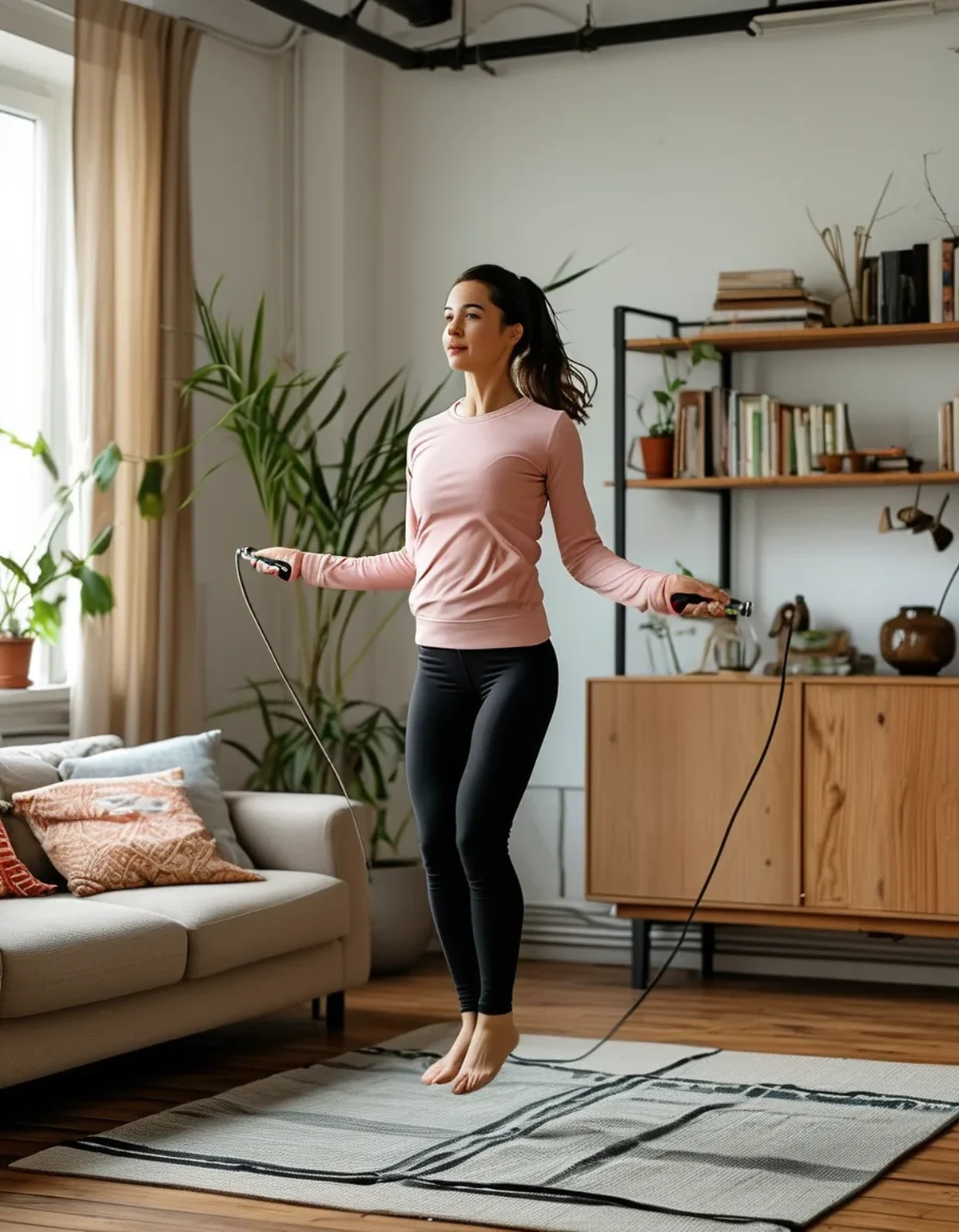
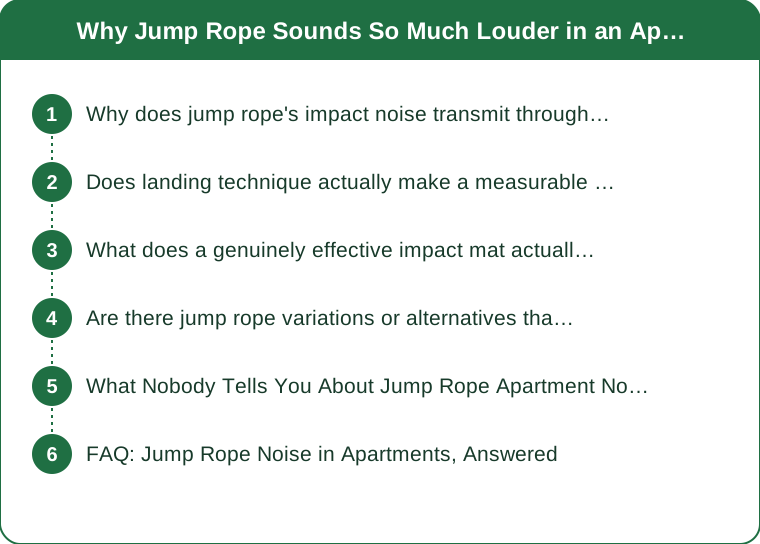
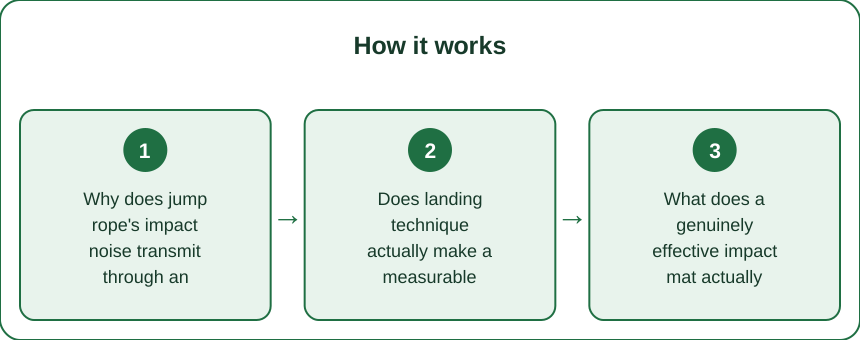
Why does jump rope’s impact noise transmit through an apartment floor so effectively, compared to some other exercises?
Jump rope involves frequent, rhythmic, relatively high-frequency impacts — often well over a hundred landings per minute during a sustained set — and this repetitive percussive pattern is particularly effective at transmitting through typical apartment floor structures, which often lack the mass or isolation needed to fully absorb repeated impact. A single jump’s impact force may be modest, but the sheer repetition and rhythmic consistency makes it especially noticeable and irritating to anyone below.
Does landing technique actually make a measurable difference to how much noise transmits through the floor?
Yes, significantly — landing softly on the balls of the feet with slightly bent knees, absorbing impact through controlled ankle and knee flexion, transmits meaningfully less impact force through the floor than a flat-footed, stiff-legged landing. Many people unconsciously land harder than necessary for the height of jump actually required, and consciously softening the landing is one of the most immediate, technique-based noise reductions available.
What does a genuinely effective impact mat actually need, beyond just any yoga mat?
A standard thin yoga mat provides minimal impact absorption for repeated jumping noise — a mat specifically designed for high-impact exercise, generally thicker (an inch or more) and made of a denser, noise-dampening material, absorbs and disperses impact force far more effectively before it reaches the floor structure itself. Stacking two exercise mats, or using a purpose-built impact mat, meaningfully outperforms a single standard yoga mat for this specific noise concern.
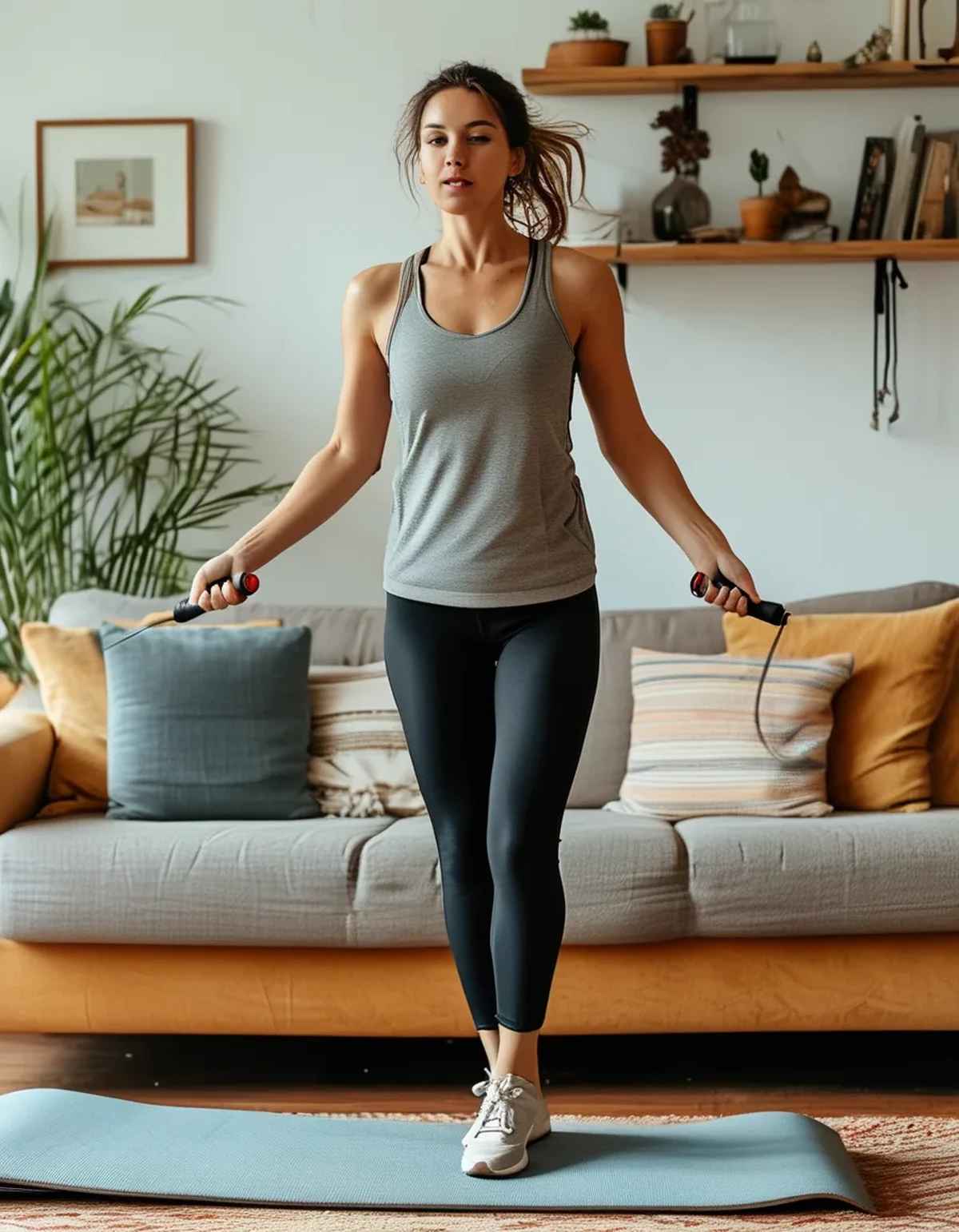
Are there jump rope variations or alternatives that produce meaningfully less impact noise while still providing similar cardio benefit?
Low-impact jump rope variations, like a smaller “phantom rope” motion without an actual rope, or single-leg low hops instead of double-leg jumps, reduce impact frequency and force while still elevating heart rate meaningfully. Alternating jump rope with genuinely silent cardio options (like a stationary bike or rowing machine) across a training week also reduces total impact-noise exposure for downstairs neighbors without eliminating jump rope from the routine entirely.
What Nobody Tells You About Jump Rope Apartment Noise
Time of day matters more for jump rope specifically than for many other workout types, since its rhythmic, sustained impact pattern is particularly noticeable during quiet hours (early morning, late evening) compared to less rhythmic activities — scheduling jump rope sessions specifically during daytime hours, separate from other lower-impact apartment workout choices, is a practical, low-effort way to reduce the actual disruption even before addressing mat thickness or landing technique.
FAQ: Jump Rope Noise in Apartments, Answered
Does rope type (weighted, speed rope, beaded) affect the noise level at all?
Rope type has minimal effect on the floor-transmitted impact noise, since that noise comes from landing, not the rope itself — rope choice mainly affects workout intensity and rhythm, not neighbor-audible noise.
Is it worth investing in a genuinely dedicated impact mat versus just using two stacked regular mats?
A dedicated impact mat generally performs better due to purpose-built density and thickness, though two stacked quality exercise mats can provide a reasonable, more budget-friendly middle ground.
How much can landing technique alone reduce jump rope noise, without any mat changes?
Softening landing technique alone can meaningfully reduce noise, though combining it with a genuinely thick impact mat produces a substantially larger combined reduction than either change alone.
TL;DR:
- Jump rope noise mostly comes from repeated floor impact, not the rope swinging through the air
- A softer, controlled landing technique meaningfully reduces the impact force transmitted downward
- A genuinely thick, dense impact mat outperforms a standard thin yoga mat for absorbing this noise
- Low-impact variations and time-of-day scheduling both further reduce noise disruption for neighbors
Jump rope’s apartment noise problem is a floor-impact issue with real, practical fixes — landing technique and mat quality address it far more effectively than assuming jump rope simply isn’t apartment-compatible.
Keep Reading
This article is for general informational and styling purposes only. Fit, sizing, and product availability may vary.