Why a Completely Silent Workout Can Feel Mentally Harder Than a Loud One, Even at the Same Intensity
A workout done in near-total silence, to avoid waking a sleeping household or disturbing thin apartment walls, can feel noticeably harder mentally than the exact same session done with music playing, even though the physical intensity hasn’t changed at all.

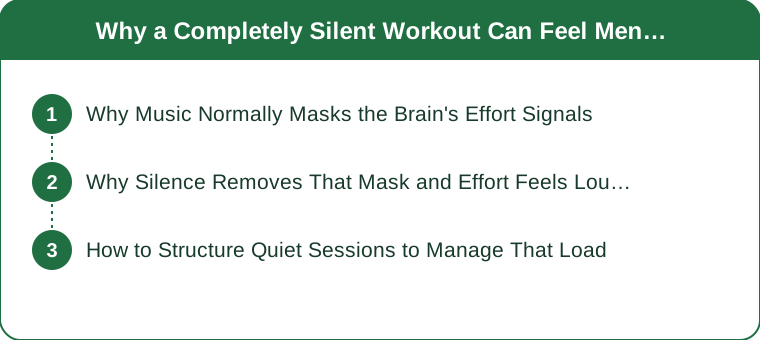
Why Music Normally Masks the Brain’s Effort Signals
The masking: music-and-ambient-noise-occupy-attention-and-partially-drown-out-the-brains-own-internal-effort-monitoring-signals-during-exercise (music and ambient gym noise occupying a meaningful share of attention and partially drowning out the brain’s own internal effort-monitoring signals during a workout, per the quiet-hiit-actual-noise-source-guide logic — music-and-ambient-gym-noise-occupying-a-meaningful-share-of-attention-and-partially-drowning-out-the-brains-own-internal-effort-monitoring-signals-during-a-workout), and the reframe (sound normally competing with, and quieting, the brain’s own effort signal)).

Why Silence Removes That Mask and Effort Feels Louder
The exposure: with-no-competing-external-input-the-brains-effort-monitoring-signal-comes-through-with-noticeably-more-prominence-making-the-same-physical-work-feel-subjectively-harder (with no competing external input to occupy attention, the brain’s own effort-monitoring signal comes through with noticeably more prominence, making the exact same physical work feel subjectively harder even though nothing about the intensity has changed, per the quiet-full-body-workout-guide logic — with-no-competing-external-input-to-occupy-attention-the-brains-own-effort-monitoring-signal-comes-through-with-noticeably-more-prominence-making-the-same-physical-work-feel-subjectively-harder), and the frame (the sensation of difficulty changing while the actual physical demand stays constant)).
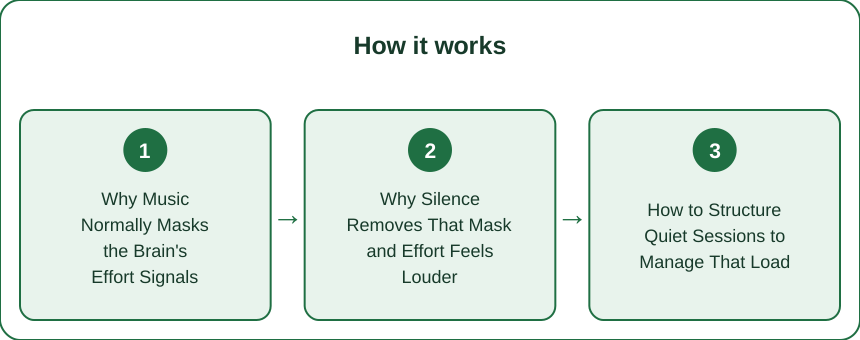
How to Structure Quiet Sessions to Manage That Load
The structure: break-a-silent-workout-into-shorter-defined-blocks-with-brief-checkpoints-to-give-the-mind-something-other-than-raw-effort-to-track (breaking a silent workout into shorter, clearly defined blocks with brief checkpoints in between, specifically to give the mind something other than raw effort signal to track and focus on, per the quiet-cardio-guide logic — breaking-a-silent-workout-into-shorter-clearly-defined-blocks-with-brief-checkpoints-in-between-specifically-to-give-the-mind-something-other-than-raw-effort-signal-to-track), and the frame (structure substituting for the mental buffer that sound normally provides).
Music and ambient gym noise normally occupy a meaningful share of attention and partially drown out the brain’s own internal effort-monitoring signal during a workout, so in complete silence, with no competing input, that same signal comes through with noticeably more prominence and makes identical physical work feel subjectively harder. Breaking a silent workout into shorter, clearly defined blocks with brief checkpoints gives the mind something other than raw effort to track, substituting for the mental buffer that sound would otherwise provide.
Keep Reading
This article is for general informational and styling purposes only. Fit, sizing, and product availability may vary.